
Propaganda I am not Falling For
on trying not to be bamboozled in 2025

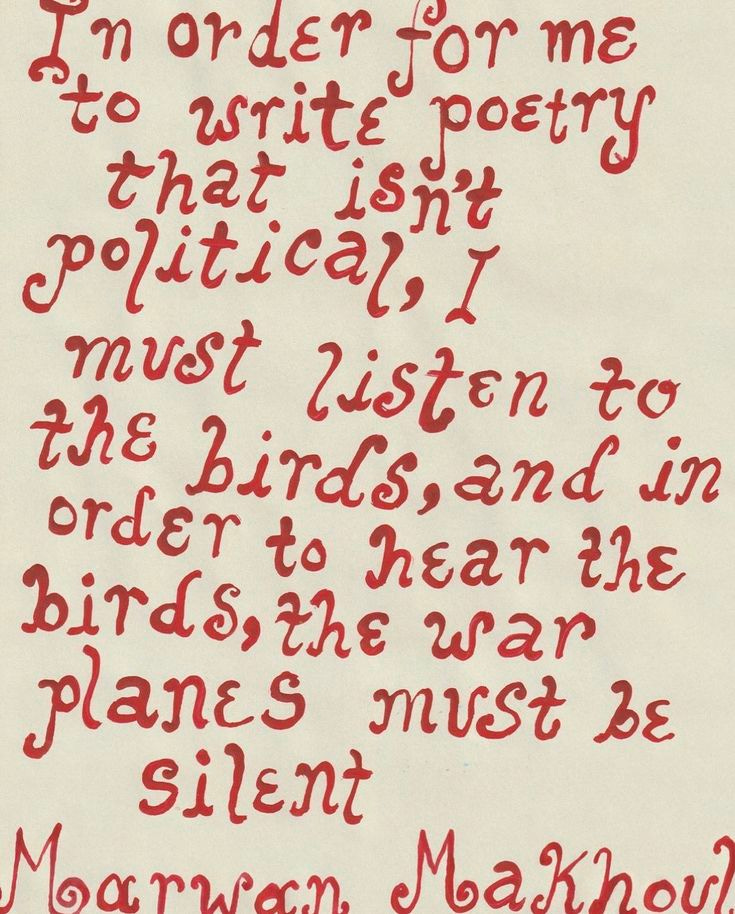
For the past several years I have consistently felt as though we are being hoodwinked, scammed, utterly bamboozled, by The Other Side.
I’m going to start this essay by making some assumptions about who “we” are and who we are not, because it will make it easier to unpack the web of thoughts I have decided to tackle today.
So I am going to go ahead and assume that if you are reading this, you are not a war criminal, a CEO of a major oil company, a climate denier or some sort of movie villain/ imperialist king (if you are, boy have you wandered into the wrong substack) (or perhaps not. Please read this whole thing and consider not destroying our world, we’d really appreciate it.)
I am going to go ahead and assume that you are, in general terms, A Good Person. Or at very least, An Average One. Someone who doesn’t want children to die in war, who wants people to be paid a living wage, who wants our children and grandchildren (and, let’s be real, our middle aged selves) to have a liveable planet to make our podcasts and go on ill-advised bumble dates on.
The trouble is that the Good People and the Okay People, they need to work together. They can’t just buy presidents like the other guys do.
When we want to create a world that we like the look of, we need to cooperate. And as we all get slightly more illiterate (the ULTIMATE scam, please see this essay by Ismatu Gwendolyn), we have come to share our ideas and organise our collective response to the world using the very platforms that the Other Guys own. This begins, I think, a very ubiquitous and algorithmically influenced collective consciousness that is RIPE with possibilities for using our own ideas, language and desires to do the right thing against us.
And here’s the thing. The people legitimately do have the power. And the people united can actually never be defeated. These aren’t just nice chants we say, these things are true. As we become more informed, connected and more able to self publish, self proliferate our ideas, congregate and communicate in bigger numbers- we are almost impossible to silence. We cannot be censored and they literally cannot jail all of us.
Their only recourse is to bamboozle us. And boy is it working.
I also think that we do a pretty good job bamboozling ourselves. We all grew up in this system after all. The other day I saw a clip from an interview with Ash Sarkar in which she articulated perfectly how we take the critical skills of picking things apart from academia and apply them in activist spaces, but that this completely stuns us and holds us back, because “politics isn’t a debating society.” We have grown up in an age of criticism, in which our politics exists largely in the context of critique and analysis, rather than coming from a place of messy, yet ultimately more effective, action. I am guilty of this too.
I think about this a lot in relation to fast fashion, the ecological effects of Shein and similar companies, as well as the horrific and inhumane treatment of their garment workers. The Good and/or Normal people should be able to say no to this pretty quickly. Women being enslaved in the global south and the total destruction of the planet so I can buy tights for 50 cents? Definitely bad, right?
But then a counter narrative emerged: it is privileged and tone deaf to be against cheap clothing. You hate the poor. You are elitist.
This is a very bad faith argument for several reasons. But the crux of it is that working class mothers buying their daughter a 2 euro jumper that they desperately need is not what keeps these shops running, and we know that. The business model relies on overconsumption, with the vast majority of these clothes being consumed recreationally because of a cultural trend towards endless buying. Yet somehow, the practice of buying from these places (that, again, abuse and exploit workers en masse) is still common, and largely unchecked and unashamed, among middle class Europeans who can absolutely afford to buy slightly less, more sustainable clothing.
The most ironic part, I think, is that those who would campaign against it, are painted as somehow tone deaf and privileged, and somehow failing at intersectional thinking, as if intersectionality can’t possibly apply to the women in the global south developing disabling injuries and working 12 hours days so you can buy, for 4 euro, a t-shirt that says, I kid you not, that you’re a “girl’s girl.”
This twisting, this sense that the progressive thing (to be against slave labour) is in fact unprogressive, and that it’s more politically correct and safe to be neutral in the face of this or any injustice, is the very bamboozling mechanism at the centre of a lot of internet discourse right now. And it has been making me feel insane for about three years.
And so, today I want to offer 3 bad faith ideas that I think we are all collectively being bamboozled by, and my humble suggestion that there might be a truer, better and more exciting alternative.
Virtue Signaling

Shortly after the brutal murder of George Floyd in 2020, and the world’s horrified and rightly furious response, a sense of suspicion began to grow. Some of the sudden interest in racial justice seemed opportunistic, and the idea that people would cynically use the death of an innocent man, and the horrors of anti-blackness in America, as an opportunity to promote their brand or even just cover their ass, rightly pissed people off.
But lately I’ve been wondering if this distaste for virtue signaling, which came from a very genuine place in 2020, hasn’t been slowly turned against us in the subsequent years.
Recently I saw a popular influencer talk about how she wasn’t going to talk about the ongoing genocide in Gaza beacuse she didn’t want to engage in “performative activism.” It seemed so strange to me, the very notion that one could performatively speak out about Gaza at all. After all, we don’t gain anything from standing with Palestinians, not in the cynical sense. There are no job opportunities that will favour us because we chose this side, no visa office, no institution. So what ulterior motive could a person possibly have? All I guarantee by speaking about Gaza is that I will lose half of my potential following in any art space, and likely never enter the USA. Yet this influencer had gotten it into her head that performative activism was the ultimate sin, and she must avoid those allegations at all cost.
When spotting scams, I think it’s useful to ask ourselves: who benefits from this idea?
If we decide to be cautious, and to stay quiet so as not to “accidentally” fall into the trap of virtue signalling or performativity, who benefits? The Palestinian children? Or the governments trying to get away with crimes?
It’s awfully convenient for The Other Guys, the idea that those who use their voice to criticise the powers that are destroying our futures, our communities, and our humanity- must be acting solely out of vanity. It also doesn’t really make sense anymore.
After all, 30 years ago, someone who went out of their way to broadcast their charity work was, rightly, considered to be a bit of a pill. But the media landscape has changed. We broadcast everything about ourselves now. And to remove any sort of moral or ethical engagement with the world from those broadcasts is to actively promote a way of living that is more selfish and apathetic than I think any of us truly are.
Influencers who continue to show their birthday parties and holidays are assumed to be sincere and even good, while those who express outrage or grief at the crimes against humanity being committed in our names are accused of being cynical, performative, even bad.
And so, I offer a potentially odd take: I don’t care if you are virtue signalling.
Isn’t that what we are all doing now, isn’t that what our culture has become? Signaling? Signaling our joy, our creativity, our identity?
I don’t even think it’s bad, or shallow. It is our equivalent of the village square, the Greek forum. But if we are influenced by our communities, if we tend to fall morally and behaviourally to the common denominator of our community- and if what we see is what becomes normalised- then personally, I would love for you to signal your virtue to me. I am sitting in the middle of the empire with blood all over my hands. Influencers taught me how to meditate and write and cook vegan food and read my astrological chart. Would it really be so bad if they gave me a few hints about what to do about all the blood?
Would it really be so bad if after sharing their morning routine we gave a few thoughts on how we should be existing in a global community?
Sure the goodness might be a little performative- but so are my photos from the beach. My question is- if we’re influencing each other anyway, why can’t we influence each other to be good?
How did we get tricked into finding the idea of someone talking about their journey to being a little more good so uncouth?
And who does that impulse benefit? The idea that our wealth and success and makeup routine and crochet hobby are things we can broadcast, but we must care about the world in private? Surely that is not the answer?
I think it’s a scam.
To take care of yourself, you must silence the world
If you have been engaged with the world in the last year, someone, at some stage, will certainly have told you to turn off your phone. As if it was your attention, your thinking about the ongoing genocide that was the problem, and not the genocide itself.
We talk a lot about the balance between engagement, “bearing witness”, and self care. How to be engaged just enough, but also switch off the phone and take breaks so it doesn’t break us. Within this dichotomy is a subtle assumption: that hiding from the world and isolating ourselves is a recharging act, and that being part of a collective movement is draining. And while there is certainly some truth to this, sometimes it feels as though it is veering towards, you guessed it, a scam.
In the dialectic of self care, healing and gentleness with the self, we are often told to view ourselves as a child. We are told to imagine the child inside us, the vulnerable, the innocent: how would we protect that child, how would we raise that child?
We are appealing to the adults we are to use our biological, social, moral impulse to protect the young, and attempting to turn that compassion inwards, imagining ourselves again as children, affording ourselves that compassion, that care.
But I say this with all the love and compassion in the world: We are not children. We are not girls. We are women. We are powerful. And there are real children starving, blown to pieces with our tax money. My inner child would rather I take care of the outer ones first. My inner child does not want to see her contemporaries blown to pieces.
The message we receive is simple and once we learn to decode it it should sicken us: your inner child is white/ western, a Palestinian child is not. Therefore, your inner child deserves a bubble bath, a politics-free life- before the Palestinian child deserves life at all.
I’m not saying we can’t have fun, we can’t go to therapy, we can’t do things that spark joy. Nobody is a bigger fan of a pink dress and a Mamma Mia themed brunch than this 27 year old adolescent. But ask yourself: who benefits from us believing we are fragile, we are children- who benefits from the most educated and powerful generation of women in history being encouraged to infantilize themselves on a mass scale?
Early in this Genocide, I had a conversation with my friend Mariam. They were involved in the group that started the encampments in Columbia university that ended up becoming a global movement. Mariam was sick with Lupus at the time. When I spent some time in the encampment at Barcelona University, I too was struggling with some health things, and many of my loved ones strongly advised against my involvement. While i understand the metaphor of putting one’s own seatbelt on first, Mariam said something to me at that time that blew my mind:
“It’s interesting to me that those who want the best for us would want us to be disengaged. Why do we think that is what is best for us? Why would anyone assume that we’re better off choosing selfishness over our humanity? Why would someone want that for someone they love?”
You can tell, also that it’s a scam, because it is only ever politics that we are told to shut out for the good of our nervous system. There isn’t the same “common sense” advice online to quit our jobs or set better boundaries with our bosses or, I don’t know, join a union to ensure the protection of our peace. That would be radical, you know, rejecting overworking culture, rejecting employee exploitation. Choosing to ignore the suffering of your fellow human, to switch off your humanity, to numb yourself to the voice of your soul and your conscience, is also radical. Yet it is only the latter that we seem to have collectively decided is a price we are willing to pay for our self care. We will burn out for university, for work, for social status, but not for ethics. To do so is considered self destructive. And yet unlike the other things, to participate in the solution to a problem is also energising, it renews us as it breaks our heart. Hope after all, is a verb. The best way to address depression about the state of the world is to do something about it. But the scam tells us it would be kinder and more responsible to dig our head in the sand.
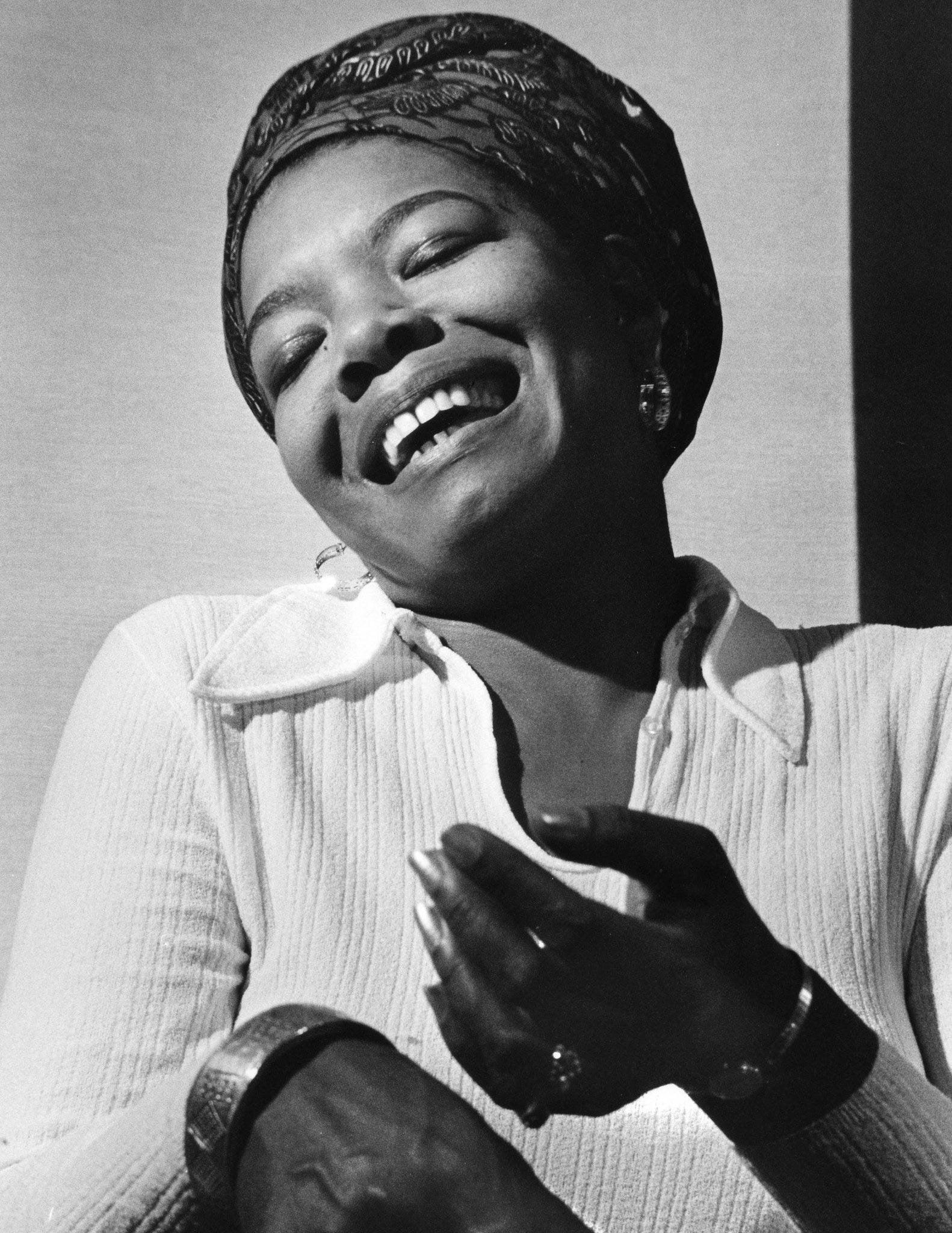
When I am feeling a lack of courage, when the spark of humanity that resides in all of us is being thwarted by laziness and overwhelm and apathy and confusion, I often listen to interviews with the American poet Maya Angelou.
I don’t know what it is exactly- but she exudes an integrity that goes all the way down to her feet, through every inch of her. She is a grande dame, to put it mildly, one of the grandest dames there is. To listen to her speak is to have the ceiling blown off your expectations for yourself and others- I listen to the same interviews again and again and it expands what i think a human can be- how calm, centered, wise and filled with beauty.
When she talks about her mother and grandmother, it is always these semi-moral fables- they raised her with character, they taught her to fight injustice and be strong, they loved her fiercely. If self care and self love is about giving yourself the care and love that a parent might give to a child- the internet might be giving us bad parenting advice.
We are coddling our inner children rather than raising them. I am not advocating harshness with the self. But in a culture obsessed with healing, growing, becoming- it is interesting that moral leadership doesn’t seem to appear as a thread.
If I am to create myself, if I am to feed myself well and move my body and take my medicine and read books. If I am to invest in education and community- if I am to think that I deserve the very best in life, the very richest life- then I should aspire, above all else, to be human. To not lose my humanity.
The “revolutionary self care” is the self care that raises rather than coddles, that forgives rather than excuses, that is never cynical, that affirms humanity, that dares to dream of different worlds.
During the Vietnam war there was a man who stood outside the white house every day with a candle. One day someone asked him- do you really think you alone can change the world with this action? He said: “I don’t do this to change the world. I do this so that the world doesn’t change me.”
My dear friend- this is the advice I would give to my daughter, if I wanted the very best life for her.
You will not protect your beautiful, innocent, precious spark by closing your eyes and locking yourself into your privilege. You will protect those things by opening your eyes and fighting.
3. Oh, So You Think You’re Special? (or: being angry isn’t very nice)
The final scam I want to talk about today is this. It’s connected to the virtue signalling scam, but deserves it’s own bullet point, because we’re going to talk a little bit about Argumentum Ad Populum.
In Philosophy, there are a bunch of common “fallacies” or common mistakes in thinking that we all make, that prevent us from reasoning well. One is called Argumentum Ad Populum, and basically it means that we tend to assume that if the majority of people think something is true, then it probably is.
If the question is: how should I live? What do I owe my fellow human? What is a Good Life? What is an ethical life? - we don’t make this decision in a vacuum, evaluating our beliefs and acting accordingly. Instead, we mostly look around us. And whatever community or society we randomly find ourselves in, we adopt the idea that the behaviour and attitude of that community is more or less the reasonable thing to do. To be less kind/ active/ empathic then our community would make us a bad person, and to be more kind/active/empathic than our community would potentially be kind of fucked up. Egotistical, self aggrandising. On some level, we all believe that the most moral or unproblematic thing we can be is “normal,”
But this is a mistake. Nice, normal people made the population in every tragedy on earth. It is considered wrong, misanthropic even, to aspire to hold yourself to a higher standard (even writing this, I feel like an egomaniac), but it’s the only way anything on earth has ever changed. People asking more of themselves.
Viewing yourself within a lineage is a beautiful alternative. Not looking to those around you for what is “normal”, but instead finding inspirations, reading the works of revolutionaries and deeply engaged, feeling, thinking people.
To view yourself in a lineage is interesting because you choose your yardstick and you set it high. It reminds me of a conversation I had about ancestors once with my friend Jelena. The idea that our ancestors are not just those whose births lead onto our physical birth, but those whose ideas and ways of showing up in the world lead to our existence as a praxis. As a queer person, I consider elderly queer people as much my ancestors as my own great grandmother, for while she created my existence in the world, the queer elder created the space I live in, the way I can express that existence. Lately I am trying to claim an ancestry of resistance. I am raising the bar for what I think I owe the world.
The people I look up to are better than me, I mean in terms of skill and also in terms of empathy, commitment and sacrifice- there’s a part of me that cringes to imagine myself being seen to put myself in the same sentence as these figures.
We are told that to see ourselves as exceptional in any way is to lack humility, to have bravado. But in every crisis, every regime, every crime against humanity- the ordinary, nice, average person has been complicit. In 40s Germany the nice, average person was a Nazi. In Franco’s Spain the nice average inoffensive person was a fascist. To aspire to being nice, average, inoffensive is to give up any chance of being good. It’s my favourite Sondheim line- “nice is different from good”. You can absolutely be a nice Nazi, but you can’t be a Nazi and be good. As your families and friends roll their eyes at you and your “rhetoric” and tell you that you are harsh and shrill and partisan- on some level they are telling you that when it comes down to it, they believe in nice over good.
I think that believing in nice over good is a fascist position. I think it’s a scam.
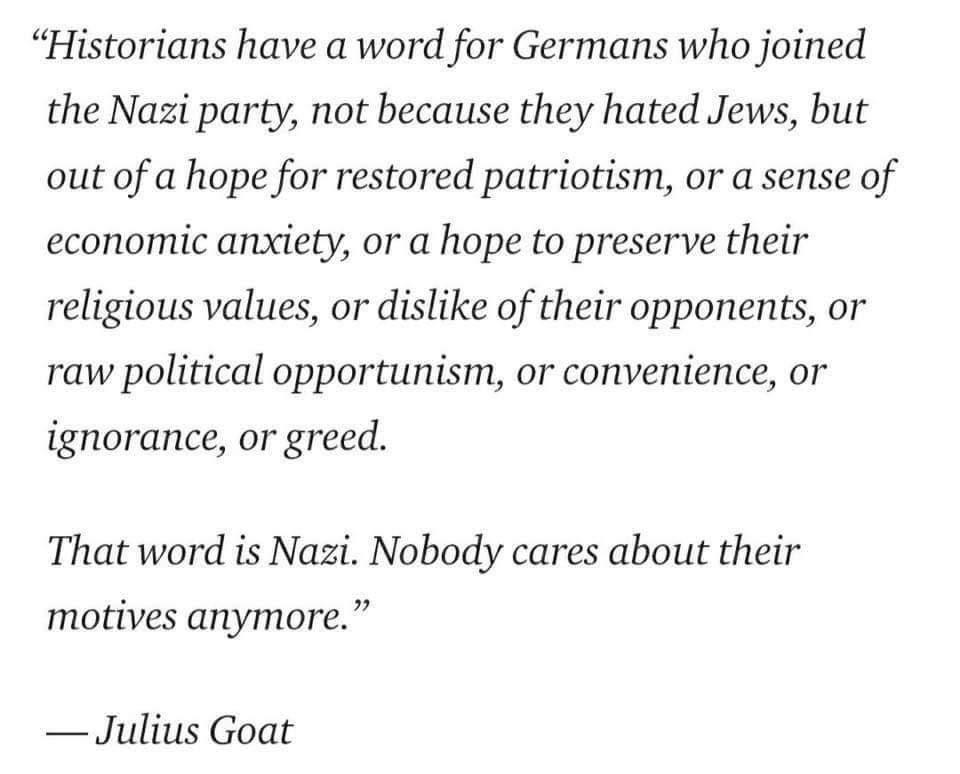
Ask yourself, if you start to cringe- who benefits from us thinking that it would be self aggrandising, egotistical and un-humble to reject the role of an average citizen and begin to view your life in the lineage of the revolutionary?
Who benefits from our nice, feminine humility when we say “oh, not little old me, I don’t think I’m better than anyone else, I am normal and good and the war is all the way over there.” Not the people of Gaza, that’s for fucking sure.
This year more than ever I have been trying to work out how to exist in the world. I am asking myself the big questions. What do I owe the world? How do I put myself on the right side of history? How much selfishness is fine, it’s a human life and it’s allowed to be lived subjectively- and how much is treacherous to my very humanity?
I feel embarrassed writing that these are the things I talk about with my friends, that we take these questions seriously and that we want, earnestly and genuinely, to expand our humanity. To do right by the world. Yet in a world where we share every moment of our becoming- our inner struggles, our heartbreak, our journeys with self consciousness and personal style and anything else- it seems taboo to write honestly and confessionally and candidly about this one central question. And that is the scammiest scam of all. To be shamed for wanting to change the world, for wanting to resist apathy, for wanting to love others instead of hoarding our wealth and fighting only for ourselves. We know who that benefits- and it’s not us. Not in the end.
Maybe it’s weird that I shared that with you. But hey, it’s got to be at least as useful as when I shared my curly hair routine on youtube dot com.
I don’t know what the rules are. I really don’t. I don’t know how to exist in this world or how to do enough or care enough or undo all the apathy and selfishness that my privilege has sewn into my skin. I don’t know how to look at burning children online and then look at flowers and then vote and then cry and then paint and then collect money and then kiss and dance in the nightclub and then text Alaa and Ahmed (Gofundme link) in the tent with the burned walls. It’s all wrong and twisted and distorted and I will never, ever be doing enough.
The more you try to be “good” the more it becomes clear that good is impossible in a world where injustices stack up impossibly high, more and more each day. But what we owe the world is to fucking try.
Jesus Christ we have to try.
The only way to truly fail, I think, is not to try. Who benefits from you not even trying? Not the Palestinians and- this is the mistake we keep making- not you. The real scam, the scam at the heart of all of these scams, is that we’re not supposed to be trying. That we’re supposed to be nice, fragile, individualistic, divided. That this is what will protect us. That this is what will bring us happiness.
The Other Guys will tell you that this is in your interest.
It will be the easiest, most destructive lie they’ve ever told.
exactly