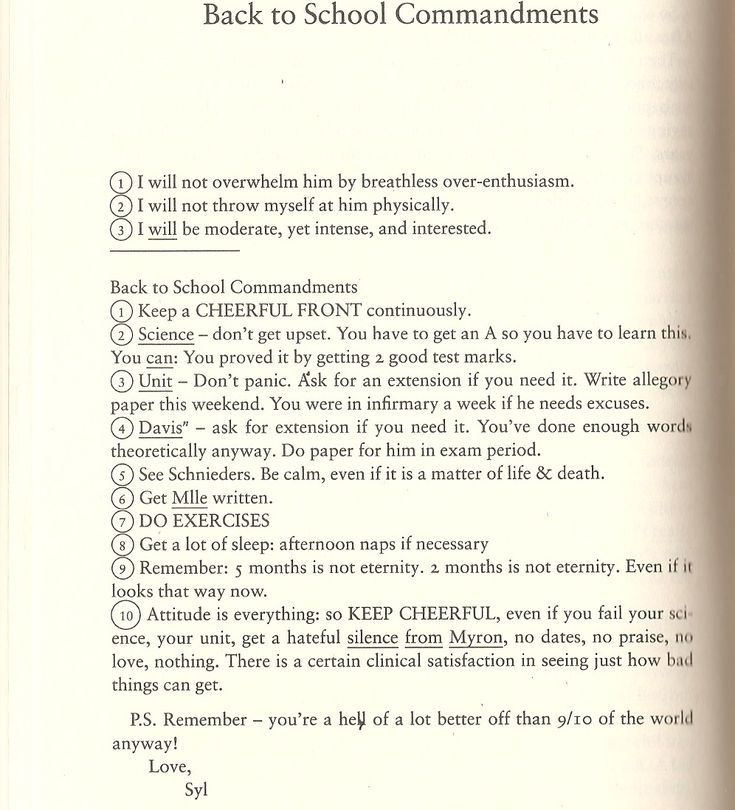
Back to School Commandments
I will be moderate, yet intense, and interested

“Bonne rentrée!” scream the shops in french villages selling school supplies. In an uncharacteristic move I don’t buy any school supplies, but I do buy a red polka dotted dress. When I visit her, Sarala tells me that polka dots are very autumnal and correct.
I have been known to celebrate the new year in January (in terms of the natural world this is very un-sensible, January being not a natural time of rebirth at all, but alas I am not immune to new planner propaganda.) But, despite not having participated in formal education for almost a decade, I still feel most renewed in September (local pagans sigh once more- autumn being the second least birth-y season.)
Last week I took the train back to Barcelona and immediately started listening to the practical magic soundtrack and drinking BDS approved pumpkin flavoured beverages despite the facts that it’s a whopping 28 degrees celcius and I think I could die of heatstroke if I even look at a jumper.
In some ways, I miss that Back to School Commandment feeling. I miss the sense at the beginning of a new school year that you were a whole different kind of person, a whole different age. A secondary school fifth year felt very different from a third year, for example- I remember starting that year with a sense of newly gained adulthood, like a sort of debutante. The feeling that each year was a fresh start.
When we are young, transformation feels very relevant at all times. The fantasy that we would return from summer transformed, practically unrecognizable, the shock on our schoolmate’s faces- didn’t every girl have that fantasy at some stage? Now I find myself missing the innocence of that fantasy. I miss the belief in beginnings, in endless beginning, in endless freshness. At the same time, I yearn for the feeling of being in the middle of something. I think that the source of the intense burnout I’ve felt this year is that I am neither at the beginning or the middle. I am neither carried by momentum nor inspired by a blank page. I am still on the runway, running and running, almost getting into the air, never quite leaving the ground for more than a few moments.
What do I mean by that?
Am I talking about my health?
Maybe.
But other things too. I am no longer having these deep revelations, these total rewrites of philosophical identity every moment. I no longer want to invent myself via the vision board, the playlist. But it’s not necessarily because I’ve arrived somewhere I’m proud of.
More and more I am realising that a self and a life and an autumn is not something one can storyboard before shooting. I am realising that the invention happens in the living, as corny as that sounds. Or, to make it sound a little more scary- we are the sum of our goddamn actions.
If I was to give an overarching theme to what I am creating lately, it would be a little too niche to market to the gods of the algorithm, but here it is: for a long time, I was very very unwell. Now I am less unwell. I am so, so grateful- and completely overwhelmed.
My therapist called me out by telling me that I am addicted to planning, to dreaming, to conceptualising and philosophising because for a long time I couldn’t function- so planning what I would do when someday I could was the most valuable and productive thing available to me.
I wrote a novel last year that opened with the observation that while sick teenagers and children often get the most sympathy- as if being young and discipacitated at the same time is uniquely an affront to humanity- I actually felt as though in a weird way sickness and adolescence have a lot in common. A certain mood. The langor. The sense that the essence of the self is in potentiality.
Adulthood, when it comes down to it, is moving from the conditional or future to the present tense.
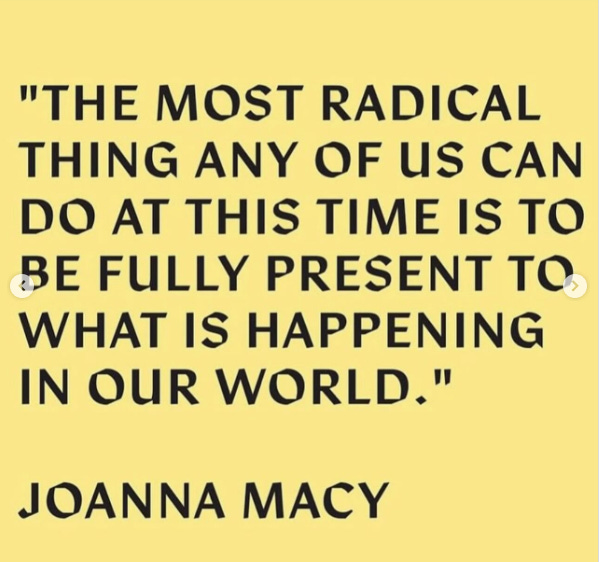
Living solidly in the present tense is the closest thing I can imagine to enlightenment. It’s not something that most of us find easy to achieve.
Not to politicise this very naval gazing vent, but I think this ties in a little with the world we see around us. My friend Mariam, very early in our friendship, hit me with the observation that “white people are addicted the notion of innocence.” that whatever we hear or learn about the world we live in, it is hard to receive the information and take it seriously without our minds almost unconsciously getting sidetracked trying to prove to ourselves that we are innocent in all of this, or trying to work out how we can be. (Personally, I blame St Paul for a lot of this, but let’s keep that beef between me and him for the moment.)
Something we’ve heard referenced a lot this year is this refrain: if you want to know what you’d have done in the holocaust, look at what you are doing now. The first time I heard this moral benchmark was in primary school. A teacher asked us if we would hide our friends if they were being rounded up by Nazis, and we said yes, of course. He probed us: But what if your parents could die? What if you were endangering your family? What if you could be tortured? What if it would cost you everything?
It was a memorable lesson, clearly, and all these years later I remember it. But not once did he mention, nor did it occur to me, that this basic question of standing up for humanity in the face of violence and evil was not simply a theoretical question but a deeply present one. There was no suggestion that this question might come up in our lives, and that our humanity would really be determined in that moment, not here in the classroom imagining.
We were taught to view our morality as something that would be determined in hypotheticals, in imaginary scenarios, just as we are taught to construct our identities on some level out of the context of our lives and worlds, just as a sick person can sometimes define herself by what she will do or has done or would do in the absence of illness.
But I don’t think I can scrub my heart of all darkness, selfishness, imperfection, and then natural walk into the world as a force of good. I don’t think that good is something you can be. I don’t think the being is the point.
What ever we would have been or would like to do or would have stood up for or will fight for, we need to bring them into the present tense.
The crucial thing, as it turns out, is to get your various tenses to agree with each other.
Funnily enough, I sat down this morning to write my own list and I ended up here. Not an elegant list of intentions but a very messy dump from my present-tense brain.
I have lived my life in search of commandments. A mission statement, a house style.
Today I love Sylvia’s-
Be calm, even if it’s a matter of life and death
afternoon naps if necessary
I will be moderate, yet intense, and interested.
I love the voice of the girl who wrote these. When I was 16 my mum printed out a copy of Desiderata to hang on my wall. At 21 I all but memorised Joan Didion’s On Self Respect.
I am, to paraphrase Joyce, a very jesuit atheist.
But real transformation, like real healing, is non-linear, messy, and far more humbling that we ever expect it to be.
A transformation that we control is nothing but Public Relations. The existentialists believed that anyone who needed to pin a poem to their wall to tell them how to live was simply afraid of their own freedom. I don’t know about that. All I know is-
My transformation won’t make me pure. I cannot vision board my way out of the fundamental problems of living in a world where death is inevitable and inequality is rampant and sometimes our desire and our kindness stand diametrically opposed and deep in the raging inferno we choose desire.
But by some miracle I get to put down the lists and give life the ol’ college try anyway.
Anyway.
I hope this found you indignant and joyful and radical and on the way to procure yourself a little treat.
xo